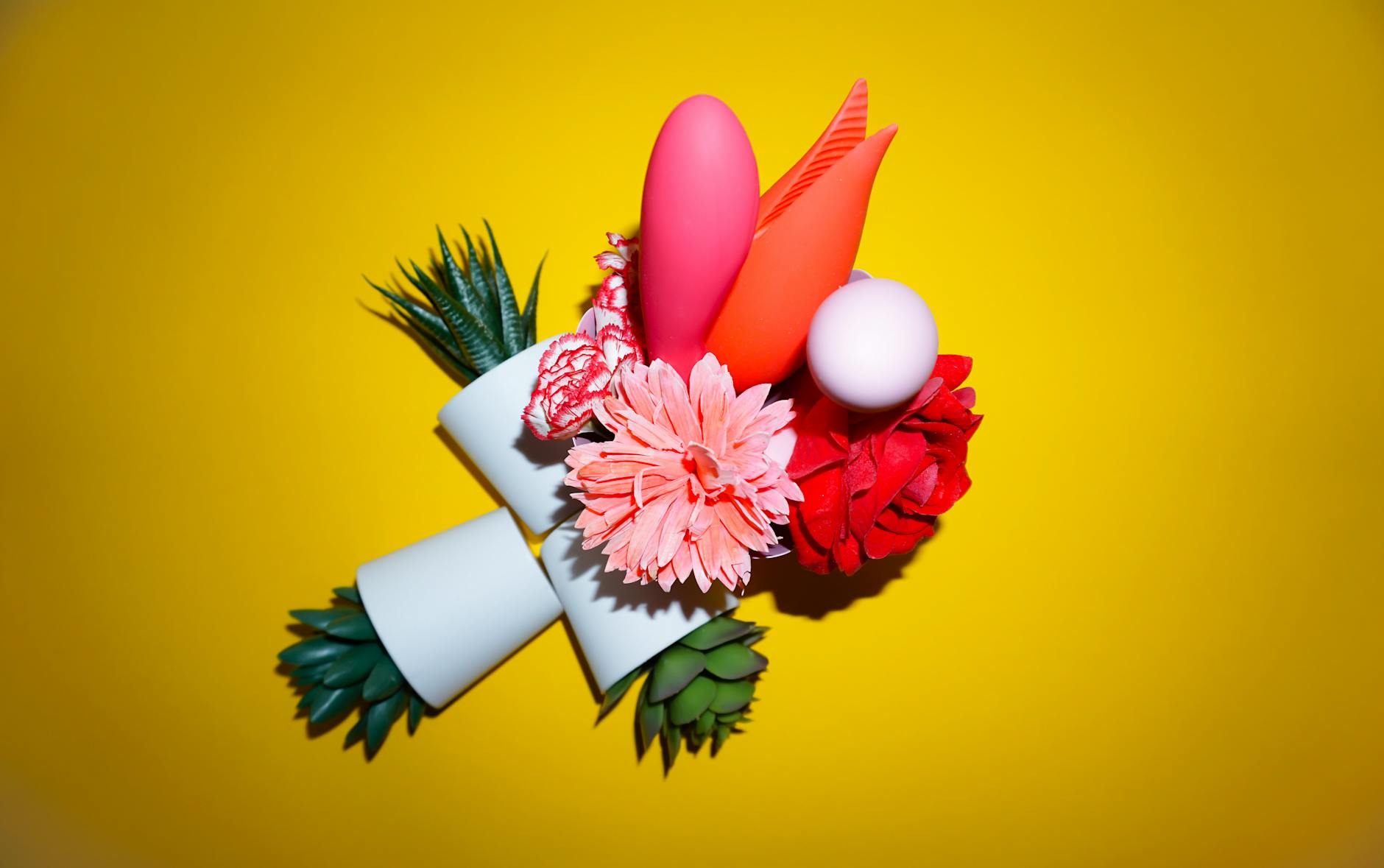
How to Use Lemon Vibrators When Penetrative Sex Becomes Uncomfortable
When intercourse stops feeling good, pleasure doesn't have to stop too. Here's why this happens, how it affects your relationship, and what actually helps.
Penetrative sex becomes uncomfortable for so many people at some point. Not because something is wrong with you, and not because your relationship is failing. Bodies change. Circumstances shift. What worked at twenty might not work at forty. And that's where most couples get stuck, because the cultural script for "good sex" is so narrowly written around penetration that when it stops working, people assume pleasure itself has to stop.
There are dozens of reasons. Hormonal shifts from perimenopause or andropause. Years of a certain type of friction creating micro-tears. Pelvic floor tension that builds over time. Endometriosis or fibroids or adenomyosis. Medication side effects. Stress and tension pooling in your hips and pelvis. Relationship disconnection that makes your body tighten up.
Some of these are medical. Others are relational. Most are both, tangled together in a way that makes it hard to separate the physical from the emotional.
What matters right now is that you're not broken. Your desire might still be there. Your capacity for pleasure absolutely is. But penetration, as your primary or only path to that pleasure, has gotten complicated.
I've worked with hundreds of couples navigating this, and the pattern is always the same. One partner experiences discomfort. They stop initiating. The other partner feels rejected. Resentment builds on both sides. Sex stops. Physical affection stops. And six months later, you're sitting in my office wondering if you still like each other.
You do. You're just grieving a thing that worked and now doesn't, and nobody's given you a roadmap for what comes next.
The first step isn't adding a toy. It's having a conversation that doesn't happen in the bedroom, preferably not after you've already tried and failed. Pick a neutral time and say something like: "My body has changed, and I want us to figure this out together. Penetration is uncomfortable right now, but that doesn't mean sex has to stop. I want to explore other ways we can feel close."
This matters because your partner needs to know it's not about them. And you need to know they're genuinely willing to adapt with you.
Once you're on the same page relationally, the physical toolkit matters. When you're rediscovering pleasure after major relationship changes, clitoral stimulation is often where the most satisfying sensation lives. The clitoris has over eight thousand nerve endings concentrated in a space smaller than a grape. Penetration involves many fewer of them.
Lemon vibrators, especially ones using air-suction technology like the Lem, offer something penetration can't: deep, sustained stimulation without the friction that's causing your pain. They work because they're mimicking a sensation your body recognizes and responds to, but in a way that doesn't put pressure on the areas that hurt.
The intensity is also adjustable. You can start at the gentlest setting and work up. You can use them solo to reconnect with what feels good on your own terms. And you can build them into partnered sex in ways that feel connected rather than like a workaround.
If you're partnered, don't lead with "I bought a vibrator because penetration hurts." That frames it as a problem you're solving without them. Instead: "I want to explore what actually feels best for my body right now. I picked up a lemon vibrator. Want to try it together?"
This shifts the narrative from "something is broken" to "we're discovering something new."
Start with the lower settings. Many people default to maximum intensity because they assume that's what vibrators are for. It's not. The most intense setting isn't the most pleasurable setting. It's just the loudest. Spend several sessions in the first three patterns before you go higher.
Pay attention to angle too. A slight tilt toward your body, rather than straight-on pressure, often feels better. Some people prefer circular motions. Others like it held still. There's no universal "right way," which is actually liberating. It means you get to figure out what works for you.
Before you use a lemon vibrator with a partner, use it alone. This isn't selfish. It's essential. You need to know what you like without performance pressure. You need to reconnect with your own pleasure separate from someone else's timeline or presence.
When penetration is off the table, many people stop touching themselves entirely. It's a grief response. But solo pleasure is where you remind yourself that you're still capable of sensation, still capable of orgasm, still sexual.
Take twenty minutes. Lie down. No goal, no endpoint. Just explore what feels good. Notice where the sensation is strongest. Notice if rhythm matters, or if you prefer stillness. Notice if your breathing changes. This information is valuable whether you're using it alone or with a partner.
Once you're comfortable with the lemon vibrator solo, you can fold it into partnered time. Some couples use it as foreplay. Others use it as the main event, with their partner touching them elsewhere or inside them, but not with penetration. Some keep it as a solo thing and that's completely fine too.
What matters is that you're building pleasure that works for both of you. When sex feels awkward after time together, rediscovering intimacy often means letting go of what sex used to look like and getting curious about what it could look like now.
If you're single, penetration discomfort is simpler to navigate but often more isolating. You might feel like pleasure requires a partner, especially penetrative pleasure. A lemon clitoral vibrator lets you remind yourself that you don't. Your pleasure is a conversation between you and your body, full stop.
If the discomfort is new and sharp, or if it's gotten worse over time, see a gynecologist or pelvic floor physical therapist. Some things need professional attention. Vaginismus needs specialized treatment. Endometriosis needs medical management. A shortened vagina from hormonal changes might need topical estrogen.
A lemon vibrator is a tool, not a cure. If something medical is causing pain, you need both the tool and the treatment.
What I want you to know is that penetrative discomfort is not a referendum on your sexuality or your relationship. It's a signal that something needs to change. That change might be physical. It might be relational. It's almost always both.
The couples who navigate this best are the ones who see it as an invitation to get curious rather than a deadline to fix something broken. They try new things. They talk about what feels good. They give themselves permission to want pleasure in different shapes than before.
A lemon vibrator, whether you choose the Lem or another clitoral vibrator, is one tool in that toolkit. It's not the whole story. But it's often the thing that gives people permission to remember that pleasure is still available, even when the path to it looks different than it used to.
No. In fact, the opposite usually happens. Couples who adapt their sex life when something stops working often report deeper intimacy, not less. You're choosing each other even when sex has to change shape. That's profound. What harms relationships is avoidance, shame, and resentment. Direct conversation and willingness to explore together builds connection.
Only if you frame it that way. If you say "my body works better with this," they might interpret it as "you're not enough." If you say "I want us to try this together," it's an invitation, not a rejection. The key is involving them in the discovery. Ask them what they notice. Ask them what they enjoy about the experience. Make it a shared experiment rather than a solo solution.
Yes, increasingly so. Tissue changes with hormonal shifts. Pelvic floor tension builds from stress and sitting. Relationship patterns shift. Your body's needs change. This is not a sign of decline or dysfunction. It's a sign that you need to update your sexual script to match your actual body and life, which everyone eventually has to do.
It varies wildly. Some people need a few weeks of solo exploration. Others need months of conversation and reassurance from their partner before it feels safe. There's no timeline. Give yourself permission to move at your own pace. Pressure to "get over it" or "fix it quickly" usually makes it worse.
It can be part of that process, but it's not the primary tool. The primary tool is conversation. Lemon vibrators, clitoral vibrators, and other devices help you remember that pleasure is still possible. But the real work happens when you and your partner get honest about what's changed and commit to discovering what's next.
Not really. Start slow and low intensity. The gentlest patterns on a lemon clitoral vibrator often deliver the most reliable pleasure. You might find that less pressure, not more, is what feels best. Let your body guide you. If something feels uncomfortable, stop and try a different angle or lower setting. Your nervous system will tell you what works.
Penetrative discomfort doesn't require you to choose between connection and pleasure. It requires you to choose honesty. Say what's happening in your body. Say what you need. Say what you want to explore. Then actually explore it, together or alone, at your own pace.
A lemon vibrator is part of that conversation, not the whole thing. But it's often the permission slip people need to remember that pleasure is still theirs to claim, just in a different shape than before.