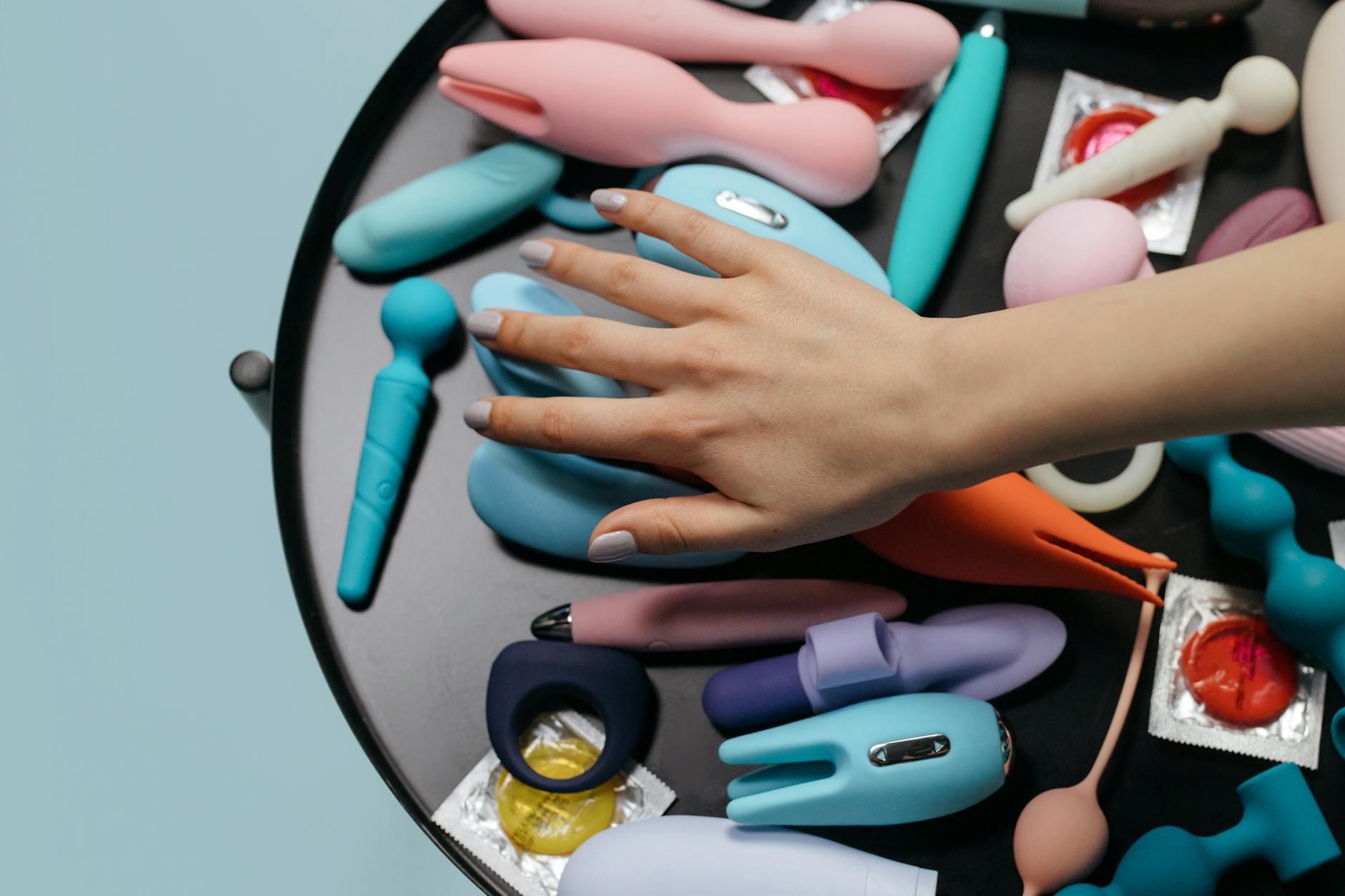
Honestly? The shift hits different. Your body hasn't changed in some catastrophic way, but if you've been using clitoral vibrators or lemon suckers for years, you've probably noticed something shifted. Maybe intensity feels muted. Maybe sensation concentrates in one spot instead of radiating. Maybe you need different stimulation patterns altogether.
That's not your imagination. That's perimenopause and early menopause doing specific things to tissue, nerve sensitivity, and how your nervous system processes pleasure. And here's the good news: understanding what's happening makes adaptation straightforward.
Let's start with the direct physical changes. Falling estrogen thins the vaginal and vulvar tissue. This happens gradually through perimenopause, accelerating after your last period. Thinner tissue has less fluid between cells, which changes how vibration transmits through the area.
Think of it like this. When tissue is thick and well-hydrated, vibration from a lemon clitoral vibrator diffuses across a larger surface. The stimulation feels broad, almost rolling. Thinner tissue is more direct. The same vibration pattern hits a more concentrated area, which can feel intense or even uncomfortable if you haven't adjusted your approach.
Blood flow also decreases slightly with lower estrogen. Your clitoris has less engorgement during arousal, which means less of that swollen, hypersensitive feeling you might have relied on. This isn't permanent numbness. It's a different baseline that requires different activation.
Nerve sensitivity doesn't disappear, but it reorganizes. The clitoris has roughly 8,000 nerve endings regardless of hormone levels, but lower estrogen changes how quickly those nerves fire and how signals reach your brain. Arousal takes longer. The ramp-up curve flattens slightly.
If you've been using the same lemon vibrator or clitoral vibrator setting for years, perimenopause is the moment it stops feeling right. This is completely normal and doesn't mean you need to stop using it.
High-intensity settings often feel jarring on thinned tissue without longer warm-up time. Patterns that worked at 30 might overstimulate at 45. You might find that constant vibration at one frequency becomes uncomfortable faster, where previously you could sustain it for 15 minutes without thinking about it.
The fix isn't to replace your device. The fix is to use it differently. Lower starting intensity. Longer warm-up. More lubrication. Variable patterns instead of steady ones. These aren't compromises. They're just the adjusted protocol.
This deserves its own section because it matters so much. Before perimenopause, you might have used lube occasionally or not at all. During and after, it becomes essential.
Water-based lubricant does two things for you now. First, it replaces some of the natural fluidity that lower estrogen has reduced. Second, it creates a buffer between the vibrator and thinned tissue, so intensity feels softer without actually changing the device.
A quality water-based lube applied generously changes everything. You're not using it because something's broken. You're using it because it lets thinned tissue experience vibration the way it's designed to be felt. With lube, a lemon sucker at pattern 2 might feel like what pattern 3 used to feel like. That margin of adjustment is huge.
Silicone-based lubes feel richer, but they're harder to wash off and they degrade silicone toys over time. Stick to water-based. Reapply every few minutes if you're going longer than ten.
Here's something that surprises people. You might not just need different physical technique. Your body's arousal sequence might have shifted.
Before hormonal changes, you could probably move straight to direct clitoral stimulation and feel something building within a few minutes. Now, skipping the warm-up completely derails the whole experience. Twenty seconds of vibration might feel sharp or irritating rather than pleasurable because the tissue isn't ready.
Budget 10-15 minutes of foreplay or non-genital touch before introducing a vibrator. This isn't because you're broken or less responsive. This is physiology. Lower estrogen means slower blood flow to the vulva, which means arousal takes time to build. Respect that timeline and sensation returns fully.
Some people find that external touch, kissing, or manual stimulation before vibration makes all the difference. Others find that beginning with a vibrator at the lowest setting for several minutes, then gradually increasing, creates the ramp they need. Experiment. Your body will tell you what works.
Your clitoris is still your clitoris. The nerve density doesn't change. What changes is the context those nerves exist in.
Peripheral sensation often feels duller. That sensation at the edges of the clitoral area, the surrounding vulva, the inner thighs. This is partly tissue thinning and partly reduced blood flow. Direct clitoral stimulation often remains more responsive than adjacent areas.
Some people find that patterns with variation work better than flat, constant vibration. A pulsing pattern on a lemon vibrator might feel more engaging than sustained intensity. Tapping patterns beat steady buzz for many. Again, experiment.
Orgasm is still absolutely achievable. Many people report orgasms feel different—sometimes more localized, sometimes shorter, sometimes requiring a slightly different angle or pattern to reach. Different is not worse. Different is information about what your body needs now.
Hormones shift. Sensation shifts. But so does context. Perimenopause and early menopause often arrive alongside other life changes—career transitions, relationship renegotiation, aging parent care, identity questions.
It's easy to blame everything on hormones. Sometimes the shift in pleasure has nothing to do with tissue changes and everything to do with stress, relationship dynamics, or how you feel about your aging body.
Before assuming your lemon clitoral vibrator doesn't work anymore, ask yourself: Am I relaxed? Do I have time without interruption? Am I thinking about my body positively, or am I fighting against what's changing? Is my partner or I initiating in a way that feels good right now?
Many people find that their most satisfying experiences post-perimenopause involve addressing both the physical protocol and the mental and emotional container around it. Lubrication plus slower warm-up plus removing time pressure plus reducing performance anxiety creates transformation.
If discomfort persists after adjusting technique, lubrication, and warm-up time, something else might be happening. Genitourinary syndrome of menopause (GSM) is common and highly treatable with topical estrogen. Pelvic floor tension that won't relax also responds well to specialized physical therapy.
These aren't rare. They're common enough that a menopause-informed gynecologist will recognize them immediately. If you're experiencing pain during vibrator use despite best practices, that's worth a conversation with someone who specializes in menopause health.
Most of the time, though, the shift is straightforward. Your body has changed. Your lemon vibrator still works brilliantly. You just need to use it differently now.
Here's what I tell people in my practice. Perimenopause isn't the beginning of the end of your sexual life. It's the moment you get to redesign pleasure entirely based on what actually feels good rather than what you thought should feel good.
For years, many of us have used vibrators in ways that made sense when our bodies responded in predictable ways. Now your body is asking for something different. That's not a loss. That's an invitation.
Your lemon clitoral vibrator isn't broken. You're not broken. Your nervous system is just reorganizing itself, and the pleasure that comes from working with that rather than against it is often deeper and more interesting than what came before. Give yourself time and patience to figure out what works now.
Absolutely. Orgasm capacity doesn't disappear. What often changes is the pathway to get there. You might need longer warm-up time, different intensity levels, specific patterns, or additional lubrication. Many people find their most powerful orgasms happen after menopause, once they've figured out their updated protocol.
Tissue thins with lower estrogen, which makes vibration feel more concentrated. What used to diffuse across a thicker area now concentrates in a smaller zone. Longer warm-up time and water-based lubrication are your first moves. Starting at lower intensity settings is also wise. You can always increase. You can't take back intensity that was too much.
Not necessarily. Most vibrators work beautifully in perimenopause with adjusted technique. Lower settings, longer warm-up, more lube, and different patterns often make your existing device feel new again. If you're shopping anyway, air-suction devices like the Lem often work particularly well for changed tissue because they stimulate nerves without the same direct pressure.
Start generously. Apply a dime-sized amount and reapply every few minutes if you're going longer than ten. You're not overdoing it. Lubrication creates the buffer between the vibrator and thinned tissue that makes sensation feel right. Water-based lube is safest with silicone toys.
No. Reduced sensation is usually temporary or adaptable. Tissue thinning doesn't mean permanent numbness—it means changed transmission of sensation. Adjusting your approach almost always restores full pleasure. If numbness persists despite lubrication and longer warm-up, mention it to a menopause-informed gynecologist to rule out other factors.
Sometimes. Alone, you control pace and intensity precisely. With a partner, communication becomes even more important because they can't feel what you're feeling. Be specific about what you need now—longer warm-up, lower starting intensity, more lube. A partner who understands these adjustments can help you rediscover pleasure together.
Your body has changed. Your pleasure hasn't disappeared—it's asking for a new approach. If you're navigating this transition and want support, reach out. That's what we're here for.