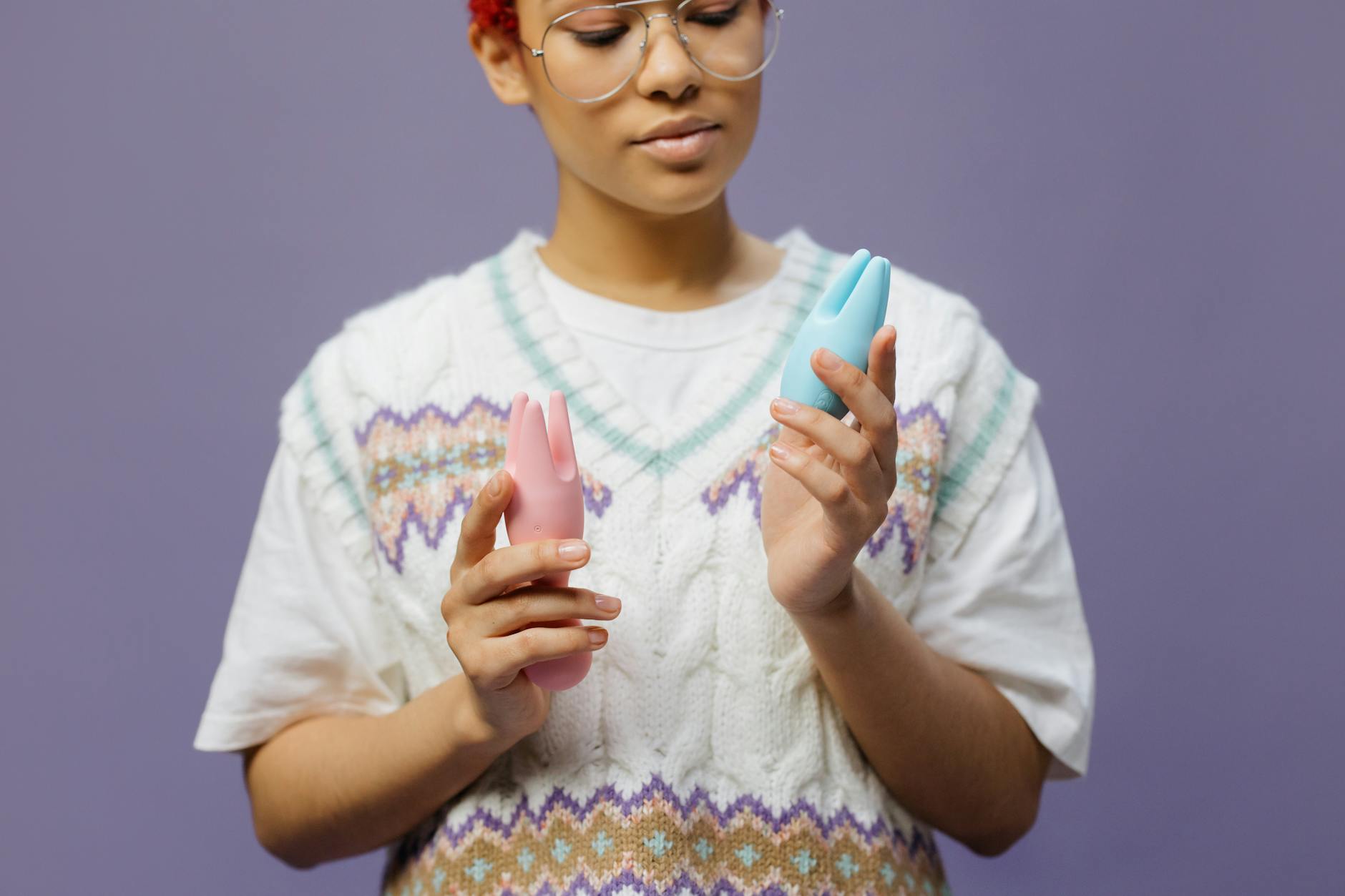
How to Use Lemon Vibrators When Exploring Solo Pleasure for the First Time
Starting your solo pleasure journey without shame or pressure. What to expect, how to build confidence, and why lemon clitoral vibrators make self-discovery easier.
Maybe you're 35 and never owned a vibrator. Maybe you grew up in a house where pleasure was whispered about or not mentioned at all. Maybe you had a partner who made you feel self-conscious about your own body. Or maybe you're single, ready to stop waiting for someone else's hands, and have no idea where to start. All of those are completely normal entry points.
Here's what I know after years of coaching people through this transition: the fear isn't really about the device. It's about permission. You're asking yourself if you're allowed to want this, if it makes you weird, if it means something is wrong with you or your relationship. None of those questions have the answer you think they do.
Let me be direct. Knowing your own body is not a luxury. It's foundational. When you understand what feels good to you, what rhythm works, what intensity you actually like, you're not just having better solo experiences. You're building the language you need to communicate with a partner, to advocate for yourself, to recognize what you deserve.
Think of it like learning to cook. You wouldn't hire someone else to eat all your meals and just hope they picked restaurants you'd enjoy. You'd learn to cook some things yourself, understand your own taste, build confidence around food. Pleasure works the same way.
And here's the part that surprises people: solo exploration often deepens partnered sex because you're no longer performing for an imaginary audience. You're present with your own body. You know what works. You can actually tell your partner what you want instead of trying to decode it from their touch.
I recommend lemon clitoral vibrators to first-timers for three specific reasons.
They're less intimidating. Most people imagine vibrators as aggressive, loud, clunky things. A lemon vibrator is elegant, small enough to hold comfortably, and designed specifically for external clitoral stimulation. There's nothing industrial about it. It feels intentional, not clinical.
The suction design works with your body, not against it. Traditional vibrators rely on friction or deep internal stimulation. Suction stimulates the clitoris in a way that's often gentler than direct vibration but can feel more intense and focused. For someone who's never had consistent clitoral stimulation before, this is huge. You get feedback from your body quickly, and that builds confidence.
The intensity range suits exploration. A lemon vibrator typically has multiple settings. You can start at the lowest pulse and work up at your own pace, which means you get to discover what you actually like instead of being thrown into the deep end.
First, practical stuff. You need privacy and time. Not hours. Thirty minutes minimum, ideally when you're not preoccupied or rushed. If you live with others, lock the door. If noise is a concern, remember that most vibrators designed for solo pleasure are quieter than people assume.
Second, charge it or put in fresh batteries. Nothing kills momentum like discovering halfway through that your device is dead.
Third, use a water-based lubricant. Your clitoris doesn't have the same natural lubrication as internal tissue, and lube makes suction work better. You'll also feel the difference immediately, which reinforces that you're doing something right.
Fourth, set an intention. Not something mystical. Just "Tonight I'm exploring what feels good" or "I want to see what happens if I try this." Intention creates permission.
Minutes 1-5: Awkwardness. You'll feel weird. You might feel self-conscious even alone. This is normal. Your nervous system is processing something new. Just breathe through it. Spend the first few minutes exploring the device on low setting without pressure to feel anything in particular.
Minutes 5-15: Curiosity. Your body will start responding to the stimulation. You'll notice sensations you maybe haven't felt before, or maybe you have but never paid attention to. There might be a tingling, a building sensation, a pulse. You might feel nothing and that's also fine. The point right now is information, not outcome.
Minutes 15-25: Building sensation or plateau. Some people orgasm quickly. Some people need longer. Some people don't orgasm the first time and that's completely normal. There's no timeline here. If you feel like you're chasing something that isn't coming, try shifting positions, adjusting intensity, or just stopping and trying again another time. Your body isn't broken. You're just learning.
After: Integration. Notice how you feel. Tired, energized, relaxed, emotional, nothing in particular. All of those are fine. There's no "right" feeling after solo pleasure.
One thing to know: many first-timers experience emotional responses during or after exploration. You might feel vulnerable, or cry, or feel weirdly emotional even if physically nothing dramatic happened. That's your nervous system processing permission and presence. It's a good sign, not a sign something is wrong.
This is the shift that changes everything. Think of this as a practice you're building, not a task to complete.
Week one: try it once. No expectations. You're gathering data on what your body is capable of when you pay attention to it.
Week two: try it again if you want. Maybe try a different setting or position. Maybe try at a different time of day.
Week three and beyond: do this as often as you want, whenever it feels good to you. Some weeks that's twice, some weeks it's once, some weeks you skip.
The goal isn't frequency. It's building a relationship with your own body that's based on curiosity instead of shame. When you approach solo exploration as information gathering instead of performance, everything changes.
Maybe you don't orgasm. Maybe you don't feel much of anything. Maybe it feels awkward or even uncomfortable. Here's what that means: nothing is wrong with you.
Some bodies take longer to warm up to new stimulation. Some people are in their heads during their first experiences and that blocks sensation. Some people have past experiences that make relaxation hard. Some people are fine with solo exploration but need a different device or technique.
If discomfort happens: stop. You don't push through discomfort in your own body. Try again another time with a lower setting, more lube, or a different position.
If nothing happens but it doesn't hurt: keep trying over a few weeks. Familiarity often brings sensation. Or it might not, and that's also fine. Not everyone orgasms easily and that doesn't mean their pleasure doesn't matter.
If you feel stuck: consider that you might benefit from talking to a therapist about your relationship with your body. Shame, past trauma, or anxiety can all block sensation. That's not a personal failure. It's information that you might need support to process.
I've seen people use the most expensive, well-reviewed clitoral vibrators and still feel disconnected because they never gave themselves permission to want it. And I've seen people have transformative experiences with a basic device because they decided their own pleasure mattered.
The lemon vibrator is a tool. But permission is the actual thing you're building here. Permission to want pleasure without earning it through partnership or performance. Permission to take time for yourself. Permission to explore your own body with curiosity instead of judgment.
That permission is what changes how you show up in your life. You stop waiting for someone else to validate your sexuality. You stop performing. You start knowing what you want and asking for it.
If you're in a relationship, you don't have to tell your partner you're exploring solo. Your solo pleasure is yours. That said, if you want to eventually use a lemon vibrator together, it helps to have already used it alone. You'll know what you like, what rhythm feels good, what setting works. When they're there, you're guiding instead of explaining.
If you're single, solo exploration is just for you. There's no timeline for when or if you'll share this with someone. You're building a relationship with yourself first.
Either way: this is your foundation. Build it without apology.
Not even a little. In fact, therapists often recommend it because it helps you understand what your body needs, which strengthens partnered sex. Your solo pleasure and partnered pleasure are different experiences serving different purposes. Both matter.
No. This is an old myth with no scientific backing. Using a vibrator doesn't change your body's ability to feel sensation from hands, mouths, or partners. If anything, knowing what feels good to you builds confidence that carries into all forms of intimacy.
That feeling often comes from old messages about women's bodies or pleasure being wrong. Notice the feeling without judgment. Maybe take a few deep breaths. Remind yourself that your pleasure is allowed. If the shame is persistent and blocking you, therapy can help process where those messages came from. You don't have to carry them forever.
Anywhere from five minutes to never. The timeline varies wildly. Some people's bodies respond immediately. Others take weeks of exploration to feel a clear peak. Some people don't have traditional orgasms but experience deep pleasure and relaxation instead. All of that is normal. The goal isn't to hit a specific marker. It's to explore what your body is capable of.
Your body will tell you. Start lying down or sitting back where you're comfortable and supported. Bring the vibrator to your external clitoris and experiment with angle, pressure, and speed. What feels good to you is the right way. Everyone's anatomy is slightly different, so your technique might look different than someone else's, and that's completely fine.
Your body, your time, your pleasure. You don't owe anyone an explanation for what you do alone. If you're worried about a partner's reaction, that's different information worth exploring. But the judgment of an imaginary audience? That's something you can let go of.