Your pelvic floor can be too tight. Not like, weak or floppy. Too tight. Like a muscle that's braced for impact 24/7 and forgot how to relax. And when that happens, pleasure doesn't disappear. It just stops being accessible. You touch yourself or a partner touches you and nothing happens. Or worse, it hurts. And then you tense up more because you're anxious about the pain, which makes the muscles tighter, which makes sensation even duller. It's a closed loop.
Here's what I've seen in my practice: pelvic floor tension is one of the most underdiagnosed reasons people stop having orgasms or stop wanting sex altogether. It's not low desire. It's not relationship trouble. It's physiology. And lemon clitoral vibrators, used the right way, can be genuinely helpful for breaking that cycle.
Your pelvic floor is a hammock of muscles that sits under your pelvis and supports your uterus, bladder, and rectum. When you're functioning normally, these muscles contract when you need them to (during sex, when you laugh hard, when you're holding in pee) and then they fully relax. That relaxation is what most people miss. They assume the pelvic floor works like a light switch. On or off. In reality, it's more like a dimmer. It should be resting at about 20 percent activation. Many people hold it at 60, 70, or even 80 percent all day.
This happens for a bunch of reasons. Chronic stress does it. A history of painful sex does it. Trauma does it. Childbirth does it. Certain medications do it. Paradoxically, trying too hard to "strengthen" your pelvic floor with endless Kegels can make it worse if you're already tense. You're just clenching a muscle that's already clenched.
When your pelvic floor is chronically tight, blood flow decreases to the area. Nerve sensitivity drops. Your clitoris, which is packed with nerve endings and depends on increased blood flow during arousal, basically goes numb. This is why people with pelvic floor tension often describe orgasms as muted, distant, or completely absent. The hardware is there. The signal just isn't getting through.
Vibration works differently than manual stimulation when you're holding tension. Manual touch, especially pressure or stroking, can actually trigger more clenching in an already-tight pelvic floor. Your body reads it as an intrusion and contracts protectively. Vibration, though, doesn't feel like an intrusion. It feels like a hum. It bypasses the protective impulse and speaks directly to the nerve endings.
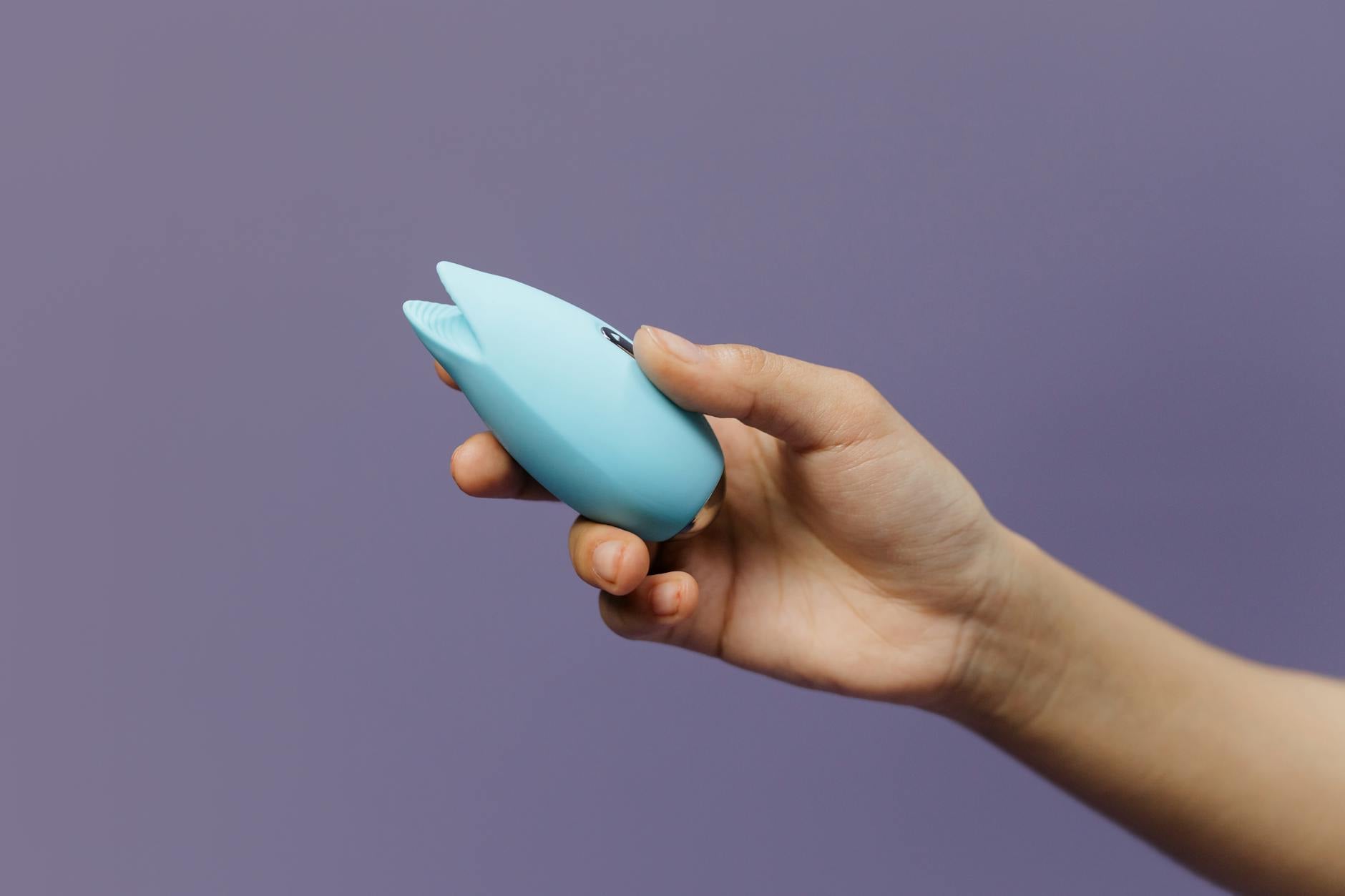
Lemon clitoral vibrators like the Lem are particularly useful here because the suction-based pattern is gentler and more distributed than direct vibration alone. It's stimulation without pressure. You're not forcing relaxation. You're inviting it.
Also, and this matters: suction creates a gentle vacuum that increases blood flow to the area. When you have pelvic floor tension, that localized blood flow deficit is part of the problem. A few minutes with a lemon vibrator can warm up the tissue, wake up the nerves, and actually help your pelvic floor realize it's safe to downshift.
Start with zero pressure in your mind. Before you even touch the Lem, spend two minutes breathing into your lower belly. In through your nose for four counts, hold for four, out for six. The longer exhale is important. This activates your parasympathetic nervous system, which is the part of your body that handles rest and recovery. You cannot relax your pelvic floor while you're in fight-or-flight mode. Breathing first is not optional.
Use the lowest setting. If your Lem has multiple patterns, start with pattern 1 or 2. The goal is not intensity. The goal is sensation and blood flow. You want to feel something, but you should not feel like you're working for an orgasm. That striving energy will make your pelvic floor clench harder.
Position yourself against the clitoris, not on it. This is crucial. A tight pelvic floor often means your clitoris is also holding tension. Direct pressure can feel sharp or even painful. Try angling the suction cup so it's stimulating the sides or the hood of the clitoris, not the glans directly. Angle matters.
Do not have a goal. I know this sounds like hippie advice. It's not. The moment you attach pleasure to a specific outcome (orgasm, wetness, a particular sensation), your body tightens. I've worked with dozens of people who stopped having orgasms not because they can't, but because they decided to "work on it," and then the pressure of working on it made it impossible. Use the vibrator for five minutes with zero expectation. See what happens. If nothing happens, that's fine. You just increased blood flow and woke up some nerve endings. That's the win.
Pair it with deliberate relaxation on the exhale. As you feel sensation, don't hold your breath. Keep breathing. And on each exhale, consciously relax the pelvic floor. Imagine the muscles softening like wet clay. This trains your body that sensation is safe and relaxation is compatible with stimulation.
I say this a lot in couples counseling: pelvic floor tension is rarely just a pelvic floor problem. It's usually a body's way of saying something about stress, safety, or relationship dynamics.
Someone will come to me saying, "I can't relax enough to have an orgasm." And then we start talking about their job, their partner's drinking, their anxiety about money, how touched out they feel from parenting. The pelvic floor is just the translator. It's telling the story your words won't.
Using a lemon vibrator helps with the physical component. But if you want lasting change, you also need to look at what's making you brace yourself. Are you in a relationship where you don't feel heard? Are you running on cortisol all day? Did something happen that made sex feel unsafe? A vibrator is a tool. A good one, especially something with the gentle design of the Lem. But it's not a fix for underlying tension that lives in your nervous system.
If you're using the vibrator and getting nowhere after a few weeks, talk to a pelvic floor physical therapist. They can assess what's actually happening and often teach you release techniques that are more effective than anything you can do alone.
Sometimes people develop pelvic floor tension because sex has been painful. Vaginismus, endometriosis, a difficult childbirth, or even years of partnered sex that didn't work for them. The body learned: "When this happens, I clench to protect myself." And then the clenching becomes the problem.
If that's you, using a vibrator solo first is important. You need to rebuild the association between stimulation and safety without the added layer of a partner or performance pressure. Spend time with the Lem alone, at your own pace, with your own rules. There's no timeline. There's no outcome you have to hit. You're just slowly telling your nervous system that pleasure can exist in your body without threat.
Then, when you're ready, you can introduce a partner. But go slow. And be honest about what you need. Most partners genuinely want this to work. They just can't read your mind.
Pelvic floor tension feels different for everyone, but common descriptions are a constant ache or pressure in the pelvic area, pain during or after sex, difficulty reaching orgasm, or a sensation that your lower belly is always "braced." Some people feel it as lower back pain or hip tightness that radiates down. If you're describing it as pressure or dull ache that's always there, you likely have some degree of tension.
Absolutely. Many people with significant tension don't feel pain at all. They just notice they never orgasm, or sex feels numb, or they have no desire. The tension doesn't always broadcast itself as pain. Sometimes it just broadcasts as numbness or absence of feeling.
It depends on how chronic the tension is. Some people notice a difference in two or three sessions. Others need weeks. The key is consistency and patience. You're retraining your nervous system, not fixing a light bulb. Give it at least four weeks of regular use before you decide whether it's working.
Yes, but carefully. If you have endometriosis, avoid internal vibration and stick to external clitoral stimulation. If you have vaginismus, definitely avoid anything internal. The Lem is designed for external clitoral stimulation anyway, so it's actually well-suited for both conditions. Start on the lowest setting and stop if you feel any pain. Pain is not part of the process.
No. They're opposites. A weak pelvic floor is slack and unfocused. A tight pelvic floor is over-engaged and braced. Some people have both at different times in their lives. You can even have a pelvic floor that's weak in some directions and tight in others. A pelvic floor physical therapist can assess which one you actually have.
Breathing work, progressive relaxation, yoga (especially slow yin yoga), pelvic floor physical therapy, and sometimes therapy for trauma or anxiety. If you've been holding tension for a long time, vibration alone might not be enough. But it's a solid starting point, and it's something you can do at home whenever you want.
Pelvic floor tension is common, fixable, and absolutely not a life sentence. Lemon vibrators can help because they deliver sensation without the pressure that triggers more clenching. Use the right approach, give your body time, and most of the time, sensation returns. Your pleasure is still in there. It just needs permission to come back online.