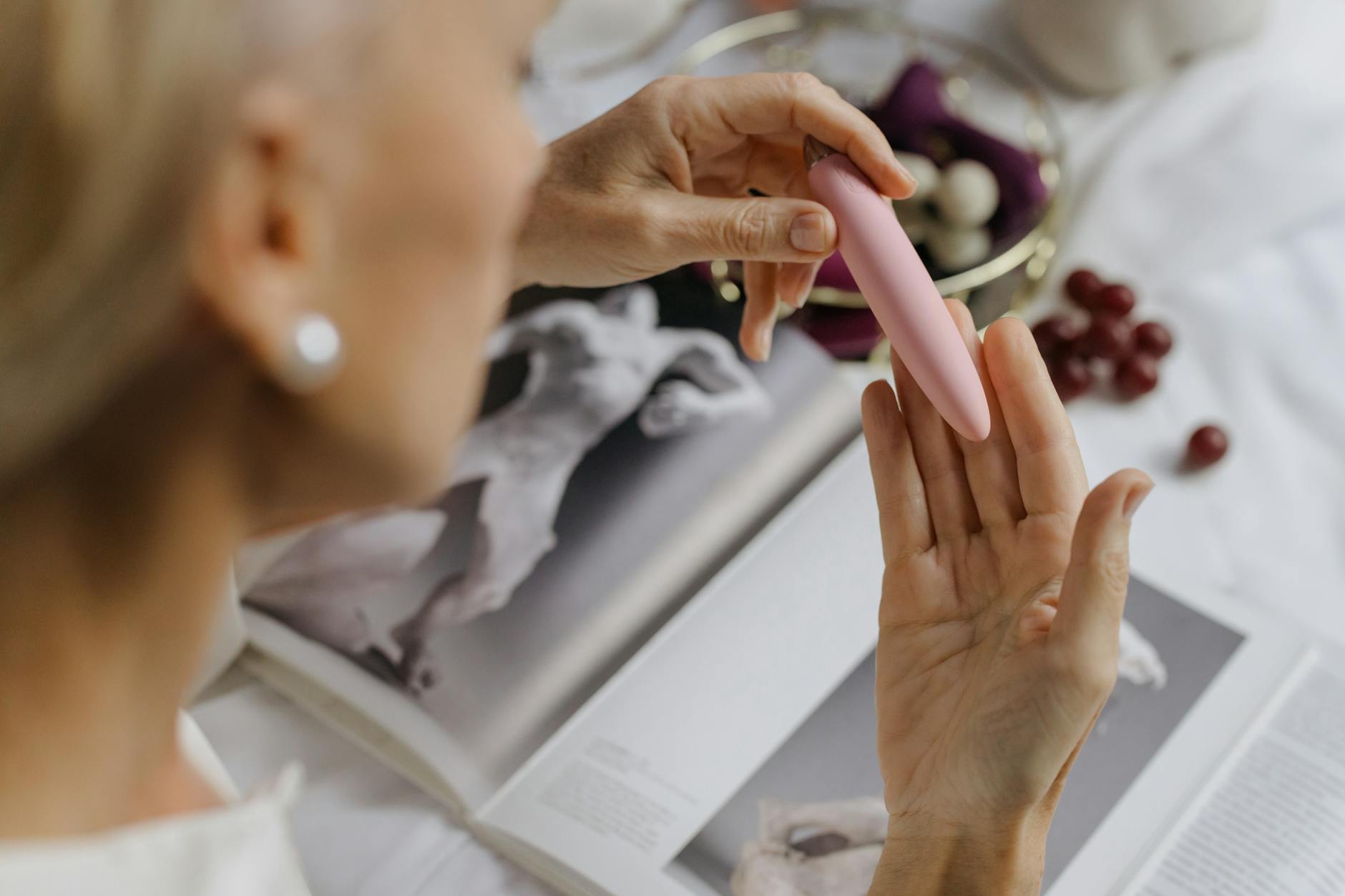
Removal of your uterus triggers immediate, surgical menopause. This is not gradual. Your estrogen doesn't taper over months like it does in natural menopause. It drops fast, and your tissues respond within weeks. What worked for you before surgery might feel uncomfortable, too intense, or numbed out now. Your pleasure capacity hasn't gone anywhere. The hardware just needs recalibrating.
When your ovaries are removed alongside the uterus (total hysterectomy with bilateral oophorectomy), your body loses its main estrogen source overnight. If your ovaries remain, they'll still produce some estrogen, but the uterine lining changes everything about how you experience pleasure in the weeks and months after surgery.
Estrogen maintains vaginal and clitoral tissue thickness. Lower estrogen means tissue thins, dries faster, and becomes more fragile. Blood flow to the clitoral complex takes longer to activate. The pelvic floor, which relies on estrogen for structural support, can feel tighter or more unstable. Some people report that their orgasms feel shallower. Others find them stronger but harder to reach.
Here's the plot twist: many people rediscover pleasure on the other side of this transition. Your nervous system doesn't forget how to feel good. The pathways are still there. You're just working with different tissue conditions.
The Lem and similar lemon clitoral vibrators use air-suction technology rather than direct vibration. This matters post-hysterectomy because suction doesn't depend on repetitive friction against fragile tissue. Instead, it creates a gentle pulling sensation that stimulates the clitoral nerve complex without mechanical pressure.
This design is particularly forgiving when estrogen-dependent tissue is thinner and more sensitive to irritation. You get powerful stimulation without the risk of microabrasions that sometimes happen with traditional vibration against delicate tissue. If you've been using other vibrators and post-surgery sensation feels too raw or ineffective, this is worth trying.
Your surgical team will give you pelvic rest guidelines. Follow them. Your pelvic floor is literally healing, and stimulation of any kind can compromise that. This isn't about pleasure. It's about not bleeding internally. Wait until you're cleared by your surgeon, typically 4-6 weeks post-op, before any kind of sexual activity.
When you do get cleared, don't jump straight to what you used before surgery. Your body has changed. Start at week 6 or 7 with exploration only. Use your hand. See how sensation feels. Notice where you're tender or numb or surprisingly responsive. This information is gold.
Before surgery, you might have been fine with minimal or no lubricant. That changes. Your vaginal tissue will be less naturally lubricated, especially in the first few months post-op when estrogen is tanked. Water-based lubricant becomes your best friend.
I recommend applying it generously and reapplying during a session. The goal isn't "just enough." It's creating a cushion between tissue and any stimulation. Think of it as wound protection and pleasure amplification in one.
If you use silicone-based lubricants with other toys, stick to water-based with a lemon vibrator or any silicone toy, because silicone lube can degrade silicone materials. Water-based feels lighter anyway, and you'll need to reapply, which gives you natural check-in moments with your body.
The Lem typically has multiple suction patterns and intensity levels. Most post-hysterectomy bodies do better starting at pattern one or two, even if you used the highest setting before surgery. Your tissue is simply more responsive right now. What felt muted before might feel perfect at a gentler level.
Give yourself 4-6 weeks of lower-intensity exploration before ramping up. This isn't about settling. It's about building a sustainable relationship with pleasure when your body is still in transition. You can always increase intensity once you understand your new baseline.
Arousals takes longer after surgical menopause. Don't fight this. Budget 20-30 minutes for warm-up instead of the 5-10 minutes that might have worked before. This is partly physiology (blood flow to the clitoris is less automatic) and partly psychology (surgery is traumatic, even routine surgery, and your nervous system needs reassurance).
Start with touch outside the vulva. Breasts, inner thighs, lower belly. Let your body remember what pleasure feels like before you introduce any tool. Then use your hand or a vibrator on the outer clitoral area for several minutes before moving inward. This graduated approach helps your nervous system settle and your tissues prepare.
Many people experience increased pelvic floor tightness after hysterectomy, even before they try to have pleasure. Your pelvic floor lost a structure it was supporting, and it's adjusting. This tightness can make pleasure feel stuck or orgasms harder to reach.
Before using a vibrator, take five minutes to consciously relax your pelvic floor. You can do this by lying down, placing a hand on your lower belly, and breathing deeply while actively releasing (not clenching) your pelvic floor muscles. Some people find a warm bath or heating pad helps the muscles let go. This five-minute ritual before pleasure isn't wasted time. It's removing the main obstacle.
Lower estrogen changes the shape and intensity of orgasms. For some, this means orgasms feel more focused in the clitoral area rather than spreading through the body. For others, they take longer to build but feel deeper once they arrive. Some people report weaker orgasms for the first 3-6 months, then a return to previous intensity. Some find their orgasms stronger than before.
This variation is completely normal. Don't measure yourself against your pre-surgery baseline. You're not broken if orgasms feel different. You're adapting. This adaptation phase typically settles around 6-9 months post-op, though hormonal changes continue for up to two years as your body fully adjusts to whatever hormonal state you're in.
If your ovaries were removed, your surgeon should have discussed hormone replacement therapy (HRT). If you're experiencing severe hot flashes, mood shifts, brain fog, or complete loss of libido alongside pleasure difficulties, HRT can help. Some of what you're experiencing post-hysterectomy isn't just about pleasure. It's about your entire hormonal system being recalibrated.
A gynecologist comfortable with post-hysterectomy care can discuss whether estrogen therapy, testosterone therapy, or a combination makes sense for you. This isn't weakness. It's using medicine to support your body through a significant transition. Many people find that 2-3 months on HRT creates space for pleasure to return more naturally.
If you're not a candidate for HRT or choose not to use it, that's valid too. You'll just need more patience with the lubrication and warm-up phase.
Hysterectomy is surgery on an organ connected to identity, fertility, and sexual self. Even if you didn't want the uterus anymore, the loss is real. Your nervous system might be grieving at the same time your body is healing. This affects arousal, sensation, and pleasure more than tissue thickness alone.
Take yourself seriously about this. If you're feeling disconnected from pleasure, it might be partly grief. That's not something a better vibrator solves. That's something therapy, journaling, or conversations with your partner might help. You can use The Lem and other tools alongside emotional processing, not instead of it.
Week 6-8 post-op: hand exploration only, no tools. Notice where sensation is numb, tender, responsive.
Week 8-10: introduce external touch with your lemon vibrator on lowest settings, 10-15 minutes max, with generous lubrication. No pressure to orgasm.
Week 10-12: explore different patterns, slightly longer sessions, still prioritizing comfort over outcome.
Months 3-6: increase intensity and session length as your tissue strengthens and you understand your new pleasure map. By month 6, most people find their rhythm.
Months 6-12: continue adjusting. Some people find pleasure easier by month 9. Others need the full 12-18 months to feel fully stable.
This is not a rigid timeline. Your body might be faster or slower. The point is gradual, intentional building.
You're not broken. Your pleasure capacity is intact. Your body has changed, and it deserves tools and strategies that meet it where it is now, not where it was. A lemon clitoral vibrator designed with gentler suction technology, paired with patience, good lubrication, and honest communication with your body, can absolutely bring you back to pleasure.