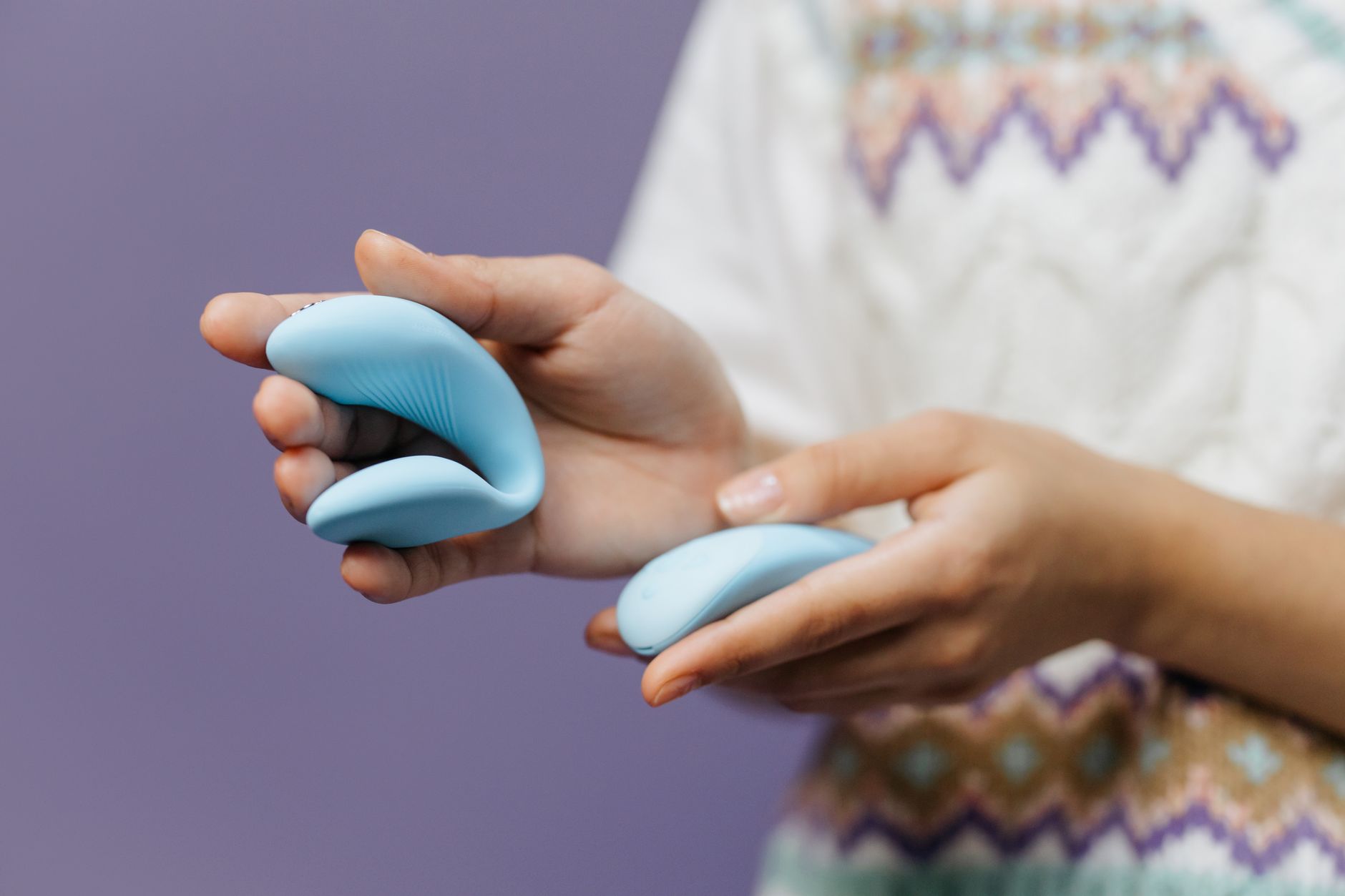
How to Use Lemon Vibrators When Clitoral Sensitivity Increases After Stopping Birth Control
Your clitoris waking up can feel overwhelming. Here's how to recalibrate with air-suction stimulation and find pleasure that actually feels good again.
You stop taking the pill, the patch, or the shot. Your hormones rebalance. Your cycle returns. And then your clitoris suddenly feels like it's been plugged into an electrical outlet.
This is real, it's common, and it's wildly disorienting after years of dampened sensation. Most people describe it as hypersensitivity, rawness, or feeling like direct touch is almost painful. That's not a malfunction. That's your body recalibrating.
Hormonal birth control suppresses the hormone fluctuations that drive your menstrual cycle. It also dampens overall genital blood flow and nerve sensitivity. When you stop, two things happen simultaneously. Your estrogen and progesterone levels start cycling again, flooding your clitoris with fresh blood supply. At the same time, the neural sensitivity that hormones had been muffling returns full-force.
This creates a window of hypersensitivity that can last anywhere from a few weeks to several months. Your clitoris isn't damaged. It's just waking up from a years-long sleep and finding everything feels dialed up to eleven.
The tricky part. Direct stimulation, which might have felt dull or even numb on hormonal birth control, now feels too intense. Penetration might feel sharper. Rubbing directly on the clitoris might produce pain instead of pleasure. This is the moment when traditional vibrators become unhelpful and when air-suction technology like The Lem becomes your best tool.
Air-suction stimulation, sometimes called clit-sucking or pulse technology, works differently than vibration. Instead of direct friction or rubbing, it creates a gentle, rhythmic suction sensation that feels more like indirect stimulation. This matters enormously when your clitoris is hypersensitive.
When you use The Lem on the lowest settings, you're not creating friction. You're creating a soft, pulsing pressure that engages the whole clitoral network without raw, direct contact. The sensation spreads across the tissue instead of concentrating all its force on the most sensitive spot.
This is why people recovering from hormonal birth control often report that clitoral vibrators don't work for them right now, but air-suction tools feel manageable almost immediately. The Lem's gentle suction patterns bypass the hypersensitivity problem because the stimulation pattern itself is gentler.
When you're dealing with post-pill hypersensitivity, start at pattern one. Seriously. Even if you used vibrators comfortably before, your baseline has shifted. Your clitoris is more reactive now.
Place The Lem against your clitoris the same way you would use any lemon clitoral vibrator, but stay at the gentlest suction level for at least three to five sessions. Notice what sensations emerge. Does it feel manageable? Does pleasure build over time, or does it immediately feel overwhelming?
Many people find they need to spend time at pattern one or two for two to three weeks before their nervous system adjusts enough to explore higher intensities. This isn't weakness. This is nervous system healing.
You don't have to place The Lem directly on your clitoris. Try using it on the hood, the area of skin that covers your clitoris. This creates a buffer layer that reduces intensity while still delivering stimulation through the tissue.
You can also use it slightly off-center, stimulating the side or base of your clitoris rather than the tip. This spreads sensation out and makes it feel less concentrated. Many people find that rotating The Lem slightly, or moving it in gentle circles around the clitoral area rather than holding it still in one spot, helps them stay in pleasure instead of tipping into discomfort.
The key is experimenting. Your clitoris is sending you feedback right now. Listen to it. If direct contact feels raw, move the device. If the pattern feels too intense, lower the speed.
Before you started hormonal birth control, you probably had a warm-up time. That's your baseline. You're returning to it. Your nervous system needs 15 to 20 minutes of foreplay, touch, and mental connection before your clitoris is ready for direct stimulation.
Don't rush into using The Lem. Touch your skin. Feel your body. Let arousal build gradually. When you do introduce the device, your clitoris will be in a different state than if you jumped straight in.
This matters because hypersensitivity often masks itself as lack of pleasure. What's actually happening is that your nervous system isn't relaxed enough yet to process the sensation as pleasurable instead of intense. More warm-up, more breathing, more time equals better outcomes.
Hormonal birth control shaped your sexual response for years, possibly decades. Now you're discovering what your body feels like without it. This is genuinely new territory, even if you had sex before you started the pill.
You might discover that sensations you enjoyed on birth control don't work anymore. You might find new sensations feel incredible. You might realize your desire itself has changed, or your orgasmic patterns, or what you need from a partner. All of this is normal neurological adjustment.
Give yourself permission to spend this relearning period without performance expectations. Solo play with The Lem during this time isn't about reaching a goal. It's about gathering data about what your body actually wants now.
If you're partnered, this conversation is worth having explicitly. "My sensitivity has shifted post-pill and I'm figuring out what feels good now" is very different from "something's wrong with me" or "I'm just not into this anymore." Clarity around what's happening helps both partners relax into the transition instead of interpreting it as rejection or loss of desire.
During early post-pill days, you might find that The Lem at the lowest setting is all you need. That's genuinely fine. But you might also want to layer techniques.
Water-based lubricant helps reduce friction and can make the whole experience feel more comfortable. Even though The Lem works through suction, a bit of lube can smooth the sensation and reduce any sense of rawness. Apply it generously around your clitoris before you start.
You can also use your fingers alongside The Lem. Many people find that gentle internal touch, or stroking the labia or inner thighs, balances out external stimulation and makes the experience feel more integrated and less clinical.
Some people notice their clitoral sensitivity returning to baseline within four to six weeks. Others take three to four months. A few experience shifts throughout their entire first year off hormonal birth control.
Your menstrual cycle is also coming back online, which means your sensitivity and pleasure capacity will fluctuate throughout the month. You might notice that right before ovulation, when estrogen peaks naturally, your clitoris feels less raw. Right before your period, when hormones drop, it might feel more reactive again.
This is your body's normal pattern, and it's information. Track what you notice. Use The Lem on days when your body feels ready, and give yourself permission to pause on days when you don't.
The lemon clitoral vibrator can be a consistent tool through all of this because it's adjustable. As your sensitivity changes week to week, you can shift the intensity up or down. You're not stuck with one sensation level.
Hypersensitivity after stopping hormonal birth control is normal. Pain during sex that persists beyond three months, or that gets worse over time, is not. If direct touch continues to cause sharp pain rather than intensity, talk to a gynecologist.
Sometimes what looks like hormone-related hypersensitivity is actually vulvodynia, pelvic floor tension, or another condition that hormonal birth control was masking. A provider trained in sexual health can assess and help you figure out what's actually going on.
The same applies if your clitoris feels numb instead of sensitive. Birth control-related changes should trend toward increased sensation over time, not decreased sensation months in. If you're not seeing that pattern, you deserve professional support.
I know this period feels confusing. You expected one thing, your body delivered another, and now using the tools that worked before doesn't work. That's frustrating and disorienting.
But here's what I've seen repeatedly in my practice. Once people get through this adjustment window using the right approach, their pleasure often becomes richer and more authentic than it was on birth control. You're learning what your actual baseline is, what your real desire looks like, and how your body responds without pharmaceutical dampening. That's valuable information.
The Lem and other lemon sexual toys are specifically designed for sensitive nervous systems. They're tools for this exact moment. Use them, trust the process, and know that what feels overwhelming now usually settles into something that feels genuinely good.
Most people notice the intensity of hypersensitivity decreasing within four to eight weeks. However, full readjustment can take three to six months as your cycle stabilizes and your body reestablishes its baseline hormonal patterns. Some people continue noticing shifts throughout their first year off hormonal birth control as their cycle settles into its natural rhythm. The key is that the intensity should trend downward, not stay constant or worsen.
You can use whatever feels good to you. Some people find traditional vibrators painful during this window and switch to air-suction temporarily. Others find that lowering the intensity on their existing vibrator and using it indirectly works fine. The point isn't that you must use The Lem or any specific lemon clitoral vibrator. It's that air-suction technology often feels more tolerable during hypersensitivity because it doesn't rely on direct friction. Experiment and trust what your body tells you.
They're not the same, though they can look similar. Post-pill hypersensitivity is temporary and directly tied to hormonal rebalancing. Vulvodynia is chronic pain without an obvious cause and can persist for months or years. If your hypersensitivity isn't improving within a few months, or if it's getting worse instead of better, it's worth getting evaluated by a healthcare provider to rule out vulvodynia or other conditions.
Maybe, but probably not identically. Hormonal birth control shaped your sexual response for years. Off it, you'll discover your authentic baseline, which might be higher, lower, or just different in character. Some people find their desire is more robust off birth control. Others find it takes longer to build but feels more meaningful. The goal isn't to return to where you were. It's to discover where you actually are and learn to work with that.
If you're in a partnered relationship and you're planning to have sex, your partner needs to know what's happening. Not as a problem to solve, but as information. "I'm dealing with post-pill hypersensitivity and I'm figuring out what feels good" is an invitation for curiosity and patience, not judgment. Partners who understand what's happening can help, slow down, and adjust. Partners who don't know often interpret sensitivity or changes in response as rejection. Communication makes this transition infinitely easier.
Yes, you can use water-based lubricant with The Lem. A light layer of lube around your clitoris can actually make the experience more comfortable during hypersensitivity because it reduces friction and softens the sensation. Silicone-based lubes can potentially degrade silicone toys over time, so stick to water-based or hybrid formulas. A little goes a long way with air-suction devices, so apply it generously but don't oversaturate.
If you're in the thick of post-pill adjustment and feeling lost, you're not alone. Hundreds of people work through this transition every month. Your clitoris is waking up. That takes time, patience, and tools designed for sensitivity. The Lem is one of them. Trust the process, listen to your body, and know that pleasure is waiting on the other side of this adjustment period. Reach out if you want to talk through your specific situation.