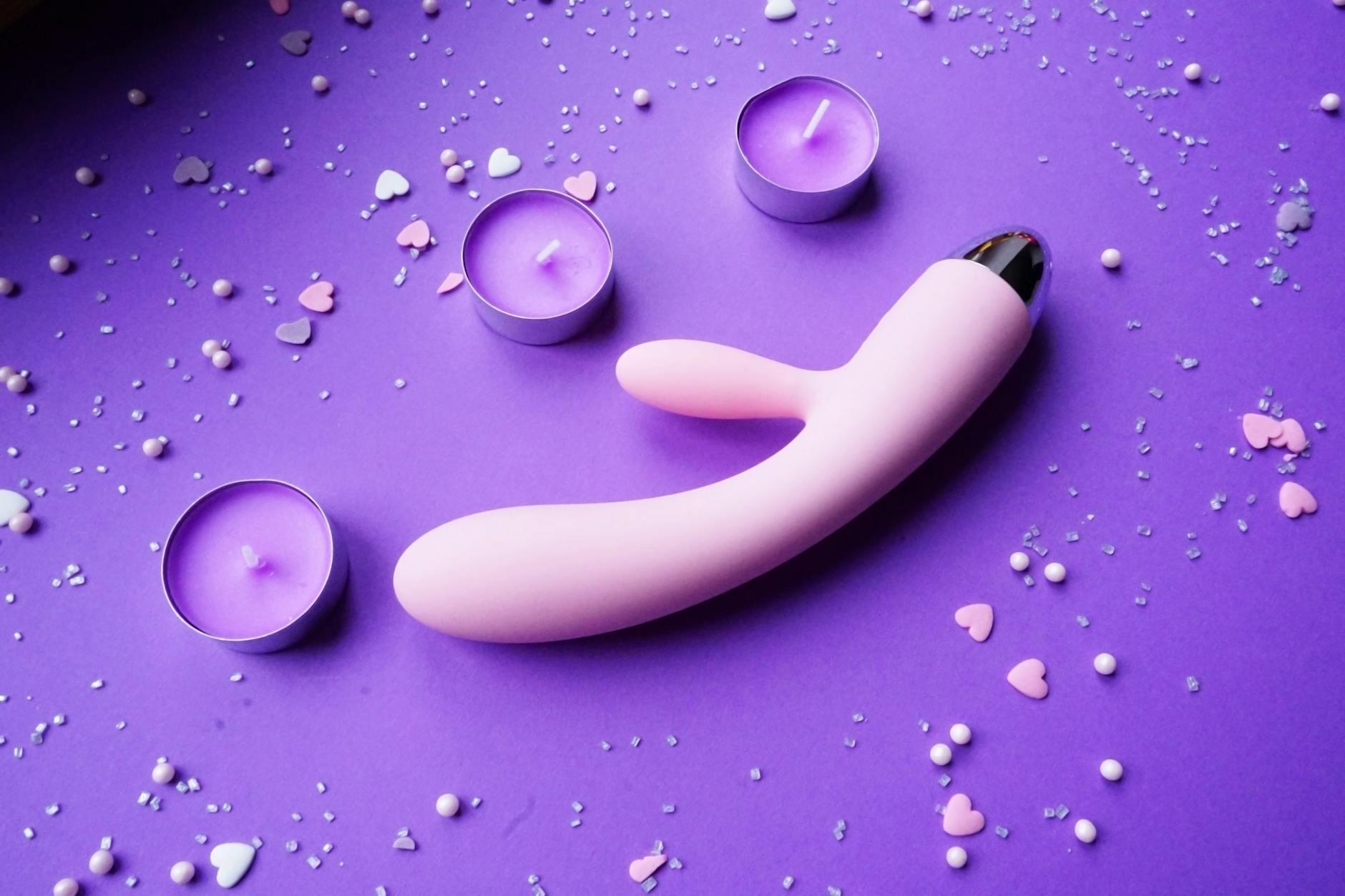
How to Use Lemon Vibrators for Better Orgasms After Trauma
Trauma reshapes how your body responds to pleasure. Lemon clitoral vibrators can help you rebuild sensation, restore agency, and reconnect with pleasure on your own terms.
Trauma doesn't just live in your mind. It lives in your nervous system, your pelvic floor, your ability to trust sensation. Many of my clients who've survived sexual trauma, relationship violence, or serious medical events report feeling completely disconnected from pleasure. Orgasms feel impossible. Touch feels dangerous. Your own body feels like someone else's.
Lemon clitoral vibrators, specifically the kind that use gentle suction rather than direct vibration, can help you rebuild that connection. Not by forcing pleasure back, but by giving you precise control and creating a safer entry point to sensation.
Here's what I've learned from years of working with trauma survivors.
When your nervous system has been through trauma, it gets hypervigilant. Threat detection is stuck in the on position. That's not weakness. That's your brain doing exactly what it evolved to do. But it means touch that should feel good can trigger your body's alarm system instead.
Sexual trauma is particularly intrusive because it hijacks the very pathway you'd normally use for pleasure. Your body learns to associate arousal with danger. The signals get crossed. A sensation that's meant to feel amazing can trigger your fight-flight-freeze response instead.
Some survivors experience complete numbness, like the pleasure-sensing parts of their body have been turned off. Others experience the opposite. Their body stays locked in a state of hyper-arousal but without the emotional safety that real desire needs. Some oscillate between the two.
Here's the thing about suction-based toys like the Lem: they're fundamentally different from traditional vibrators. Instead of friction or pulsing against your tissue, suction creates a gentle wave of pressure that stimulates the nerve endings without requiring you to endure direct contact.
For trauma survivors, this matters because suction creates a buffer. There's a layer between you and the sensation. You're not experiencing raw stimulation. You're experiencing something more diffuse, more controllable, less likely to trigger a freeze response.
The Lem also has a speed gradient from 1 to 7, which means you control exactly how intense things get. You're never surprised by a jolt of sensation you didn't choose. You're never overstimulated. You set the pace. You own the experience.
If you're working with trauma, rushing into anything doesn't help. Here's my protocol:
Session 1: No insertion, fully clothed, outside the bedroom. I know this sounds extreme, but it matters. Use your Lem on your inner thigh or the outside of your clothes for 30 seconds, level 1, while sitting on your couch watching something you enjoy. Just 30 seconds. The goal is to feel the sensation without any performance pressure and in a space that's associated with safety. That's it. Nothing more.
Session 2: Same but bare skin, still clothed below the waist, still outside the bedroom. Same spot (inner thigh, lower stomach), 1 minute, level 1, same neutral environment. You're teaching your nervous system that this sensation is safe and chosen by you.
Session 3: Move the location to your vulva, still clothed, still outside the bedroom, 2 minutes, level 1-2. Pause whenever you feel tension or numbness. This isn't about cumming. It's about noticing what your body feels.
Session 4 and beyond: You get to decide. Move to your bedroom if you want to. Try level 3-4 if it feels good. Try a pattern that feels interesting. The progression is entirely yours.
Many trauma survivors experience complete absence of sensation during early sessions with toys. Your clitoris feels like plastic. Your vulva feels distant. You feel like a ghost in your own body.
This is normal. This is not permanent. This is your nervous system telling you it's not ready to fully arrive yet.
Here's what helps: keep going, but don't push. Session after session, your body gets more data that this experience is safe. It's not urgent. There's no goal. You're not trying to cum. You're just showing up, using a lemon vibrator at level 1-2, for 5 minutes, while breathing slowly.
After weeks of this, something often shifts. Not immediately. Not dramatically. But gradually, sensation starts to return. Your clitoris wakes up. Your body believes it's safe. Your arousal system starts to work again.
I've had clients take months to feel anything at all, and then suddenly orgasms come back, often stronger than before.
Orgasms aren't just a physical thing. They require your nervous system to downshift into parasympathetic mode. Relaxed. Safe. Present. Trauma keeps you in sympathetic mode. Alert. Defensive. Ready to run.
Using a lemon clitoral vibrator in a framework of radical control helps rewire that. Every time you:
Choose the exact moment to start and stop
Control the intensity by adjusting speed
Decide what you're wearing and where you are
Breathe slowly while using it
Stop whenever you want without judgment
You're sending your nervous system a message: this is under my control. I am safe. My pleasure belongs to me.
Repeat that message enough times, and your nervous system starts to believe it.
If you're working with trauma, solo exploration with your lemon vibrator is often the right starting point. No performance pressure. No need to manage someone else's experience. No anxiety about what they're thinking.
But eventually, many survivors want to bring a partner into the experience. That's beautiful. Here's how to do it:
First, your partner needs to understand that this isn't about them. Their job is to be present and safe, nothing more. They sit nearby (not over you). You use your Lem. They watch if you want them to, or you ask them to look away. They don't touch you unless you ask. They don't make suggestions about speed or technique. They don't talk unless you talk first.
Their only job is to create a container of safety. That's it.
When you're ready, they might hold your hand. They might be inside the room but sitting across from you. They might eventually use a toy on you, but only if you've tried it yourself first and you trust them completely.
Some survivors hit a wall where sensation stops improving. They feel okay, but not amazing. Orgasms are possible but seem distant.
This often means your body needs a different kind of stimulation to keep progressing. Try a lemon vibrator after you've worked through early trauma responses, or rotate between the Lem and manual stimulation. Some people find that combining external stimulation with internal touch (fingers inside, suction outside) breaks the plateau.
Others find they need to work more deeply with a trauma-informed therapist to address the nervous system piece. That's not a failure. That's being honest about what you need.
Here's something I tell every trauma survivor I work with: your orgasm doesn't prove you're healed. An orgasm doesn't mean you're over it. An orgasm isn't the goal.
The goal is being able to experience pleasure without your body mobilizing for danger. The goal is feeling like your body belongs to you. The goal is being able to say yes and no and trust that choice.
Orgasms might come back. They might feel different than before. They might feel better. Or you might discover that pleasure looks totally different than you thought. All of that is okay.
Your pleasure isn't obligated to look like anyone else's.
Not if you go slowly and stay in control. The key is that you're choosing every single element. You're not being rushed. You're not being pushed past your comfort. You're using suction-based stimulation, which creates a buffer between you and direct sensation. Start at the absolute lowest speed. You can always build up. You cannot unbuild intensity that was too much.
It varies wildly. Some people report reconnecting within weeks. Others take months or longer. The timeline depends on the trauma type, whether you're in therapy, your nervous system's baseline sensitivity, and how much other healing work you're doing. There's no "normal" here. Your timeline is your timeline.
Yes, but with intention. Many people with PTSD find that the control element of a toy like the Lem (adjustable speeds, easy on-off, no surprises) actually helps regulate their nervous system. The key is using it in a safe space, at a time when you feel grounded, and stopping immediately if you feel triggered. If you have severe PTSD or flashbacks, working with a trauma-informed therapist alongside toy exploration is ideal.
That's incredibly normal. Numbness is a trauma symptom, not a permanent state. Keep showing up, same time each week, same safe space, and let your nervous system slowly realize that this is safe. Sensation often returns gradually, not dramatically. You might notice a tiny spark in week 3 that wasn't there in week 1. That's progress.
That depends on your relationship and your safety. If you're in a secure, trustworthy relationship, sharing this journey can deepen intimacy and help your partner understand your experience. If you have any concerns about judgment or safety, you can absolutely keep this solo. It's your body. It's your healing. You get to decide what you share and when.
Stop immediately. You don't need to push through or stay present with the discomfort. Set the toy down. Turn it off. Step away. Breathe slowly. If you're safe where you are, stay there until you feel grounded again. Then you get to decide: try again next week, or take a break. There's no right answer. Listening to your nervous system is the whole point.
Healing from trauma is not linear. Some weeks will feel like progress. Some weeks will feel like you're back to square one. Both are normal. Both are part of it.
Using a lemon vibrator isn't a cure. It's a tool. A way to start rebuilding a relationship with your body that centers your agency, your safety, your choices. With time and patience, many survivors find that pleasure becomes possible again. Different maybe. Deeper probably. But genuinely, solidly theirs.
You deserve that. And you don't have to rush to get there.
If you're navigating trauma and want support beyond what toys can offer, reach out. I work with trauma survivors on rebuilding intimacy and safety in their bodies and relationships. It's some of the most meaningful work I do.