How to Use Lemon Clitoral Vibrators With a Long-Term Partner
The conversation nobody wants to have. The pleasure nobody should skip. Here's how to introduce a lemon vibrator into an established partnership without shame, awkwardness, or dead bedrooms.
After five years, ten years, twenty years together, sex becomes a familiar routine. That's not a problem in itself. But it does mean that introducing anything new—especially a toy—can feel loaded with subtext. Does it mean they're not enough? Are you bored? Is something wrong?
None of that is true. What's actually true is that lemon clitoral vibrators, and similar tools, work with your body's natural response cycle instead of against it. They're not a replacement for your partner. They're an amplifier. And couples who learn to use them together often report the most satisfying intimacy of their entire relationship.
Here's how to navigate the conversation and the experience without turning it into a referendum on your partnership.
Most long-term couples have never talked openly about what they want sexually. You've fallen into a rhythm that works well enough, and changing it feels risky. What if your partner feels threatened? What if they interpret it as rejection? What if it becomes awkward?
Those fears are valid. But here's what actually happens in relationships where one person introduces a lemon clitoral vibrator successfully: the conversation becomes a doorway to deeper intimacy, not a threat to it. The act of asking for what you want sexually is one of the most vulnerable, connecting things a couple can do.
The key is framing it correctly. You're not saying, "I need this because you're not doing it for me." You're saying, "I want to explore more of what feels good with you." Different intent, same tool, completely different outcome.
Pick a moment when you're not about to have sex. The car, a walk, after dinner. Somewhere neutral and calm. Say something like: "I've been thinking about our sex life, and I want us to explore more. I think I'd enjoy more intense clitoral stimulation, and I read about tools that could help us do that together. Would you be open to trying something?"
Notice what you're doing here. You're naming a specific desire (more intense clitoral stimulation). You're offering a solution. You're inviting them into the experience. You're not hiding, and you're not demanding.
If your partner says no immediately, ask why. Often it's one of four things: they're worried they're not enough, they think it'll feel weird, they've never considered it, or they have a genuine boundary. Only the last one is a true dead end. The first three are just information you can work with.
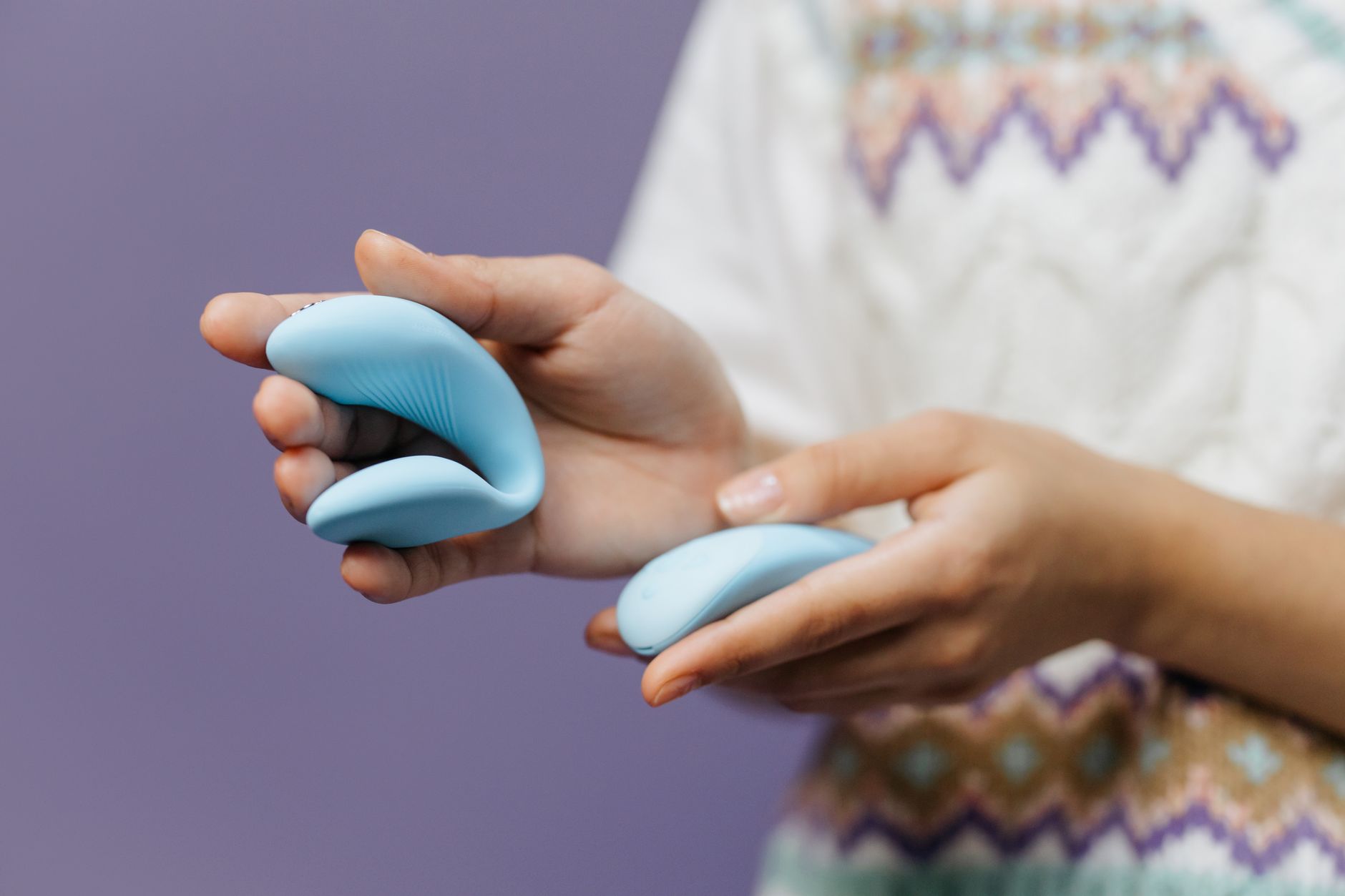
Lemon clitoral vibrators—sometimes called lemon suckers or air-suction devices—feel fundamentally different from traditional vibrators. They use gentle suction and pulsing patterns rather than direct vibration, which means several things for partnered sex.
First, suction stimulation mirrors what manual stimulation can't quite replicate. The sensation builds gradually, which gives both of you time to stay present together rather than rushing to a goal. Second, the patterns are rhythmic and predictable, which means your partner can learn them and anticipate your responses. That's actually deeply intimate. Third, there's something about the design of a tool like the Lem that feels less clinical than other options. It's sleek, it's intuitive, and partners report feeling less like they're managing a lot of complexity and more like they're exploring together.
The practical advantage is that your partner doesn't have to be the sole source of clitoral stimulation anymore. That takes pressure off both of you. They can focus on other forms of touch and sensation while the tool handles the specificity you need.
Don't make it a production. Don't set a special night or light candles specifically for "the toy moment." That adds pressure and performance anxiety, which kills the point.
Instead, incorporate it naturally into sex you're already having. You might use it during foreplay. You might use it during penetration. You might use it after, while your partner is touching you in other ways. The location in your sex life matters less than the fact that it's just part of what's happening, not the main event.
Start on a lower setting. This isn't about immediately reaching peak intensity. It's about exploration. Your partner might want to hold it. They might want to watch you use it. They might want to use it on you while you're kissing or they're inside you. The point is that you're experimenting together, which means you're both learning what feels good in real time.
Here's what often happens: the first time, it feels a little awkward. That's completely normal. You're doing something new, and new things are weird. By the third or fourth time, it starts to feel integrated into your sex life. By the tenth time, you might forget it ever felt unusual.
Talk during the experience, not just about it afterward. "That feels good." "A bit gentler." "Stay there." This serves two purposes. It tells your partner what's working, and it keeps you both present and engaged.
Afterward, name what worked. Not in a feedback-giving way, but in a connected way. "That was really good." "I liked when you held it and kissed me at the same time." "The pattern on level two was perfect." Positive reinforcement helps your partner feel like they made a good choice introducing this together.
If something didn't work, you can address that too. But frame it as information, not criticism. "The angle felt off" is useful. "It didn't feel like anything" is useful. "This doesn't work for me" is useful. What's not useful is silence, which your partner will interpret as judgment.
Most people haven't handled a lemon clitoral vibrator before. They don't know the intensity levels. They don't know if you want constant contact or if you need breaks. They don't know if you want them to move it around or keep it still.
The answer is: show them. Guide their hand. Say, "Like this," and then let them feel what happens when they shift slightly or increase the pattern. You're not being critical. You're being collaborative.
Many partners actually find this genuinely hot. You're showing them exactly what turns you on. You're trusting them with your pleasure. That's intimate in a way that transcends the physical.
Once you've used a lemon clitoral vibrator together a few times, you're in a new conversational space. You've already broken through the barrier of "we don't talk about what we want sexually." That door stays open.
This is where long-term relationships often transform. You start asking each other real questions. What do you want more of? What have you been afraid to ask for? Are there other things you want to explore? You're not becoming a different couple. You're becoming a more honest version of the couple you already are.
That honesty is actually the antidote to the routine you were worried about in the first place.
Some partners take time. Some need to understand the why before they're willing. Consider showing them research about clitoral stimulation and orgasm. Consider letting them read articles about pleasure and long-term relationships. Consider suggesting that they talk to a therapist or relationship coach if they're worried about what it means.
But also consider this: if your partner is unwilling to support your pleasure after genuine conversation and information, that's a separate relationship issue that a toy won't solve. In that case, professional help from a couples counselor isn't overkill. It's practical.
Most of the time, though, partners come around. They realize their partner is braver and more honest than they expected. They realize that shared pleasure is something they want too. And then everything shifts.
If you're using a lemon clitoral vibrator with a partner, you both need to know how to care for it. Wash it after every use with warm water and mild soap. Charge it according to the manufacturer's guidelines. Store it somewhere cool and dry. If you're concerned about hygiene or if you're using it during different types of sex, consider a barrier like a condom or a dental dam.
These aren't sexy conversations, but they're part of the partnership. You're showing each other that you respect the tool and that you respect each other's bodies.
Here's what I've seen happen consistently in couples who introduce lemon clitoral vibrators together: they don't just improve their sex life. They improve their communication, their vulnerability, and their sense of being known by their partner. The toy is almost incidental. The real shift is that you've both agreed that your pleasure matters, and that exploring it together is worth a little awkwardness.
That's the kind of foundation that actually sustains long-term relationships.
Not if you frame it right. The research is clear: partners who understand that a toy is an addition, not a replacement, feel more connected, not less. They're part of the experience. They're not being replaced by it.
Sooner is usually better than later. The longer you wait, the more weight it carries. Introducing it early on signals that this is a normal, integrated part of your sex life together, not something you're desperately adding because something is wrong.
That's fair. You don't have to want something just because your partner does. But explore why you're uncomfortable. Is it judgment about pleasure? Is it worry about performance? Is it something about the specific tool? Understanding your own resistance is the first step to deciding whether you want to work through it.
Absolutely. Some couples use it during penetrative sex, some use it before, some use it after. You get to decide what works for your bodies and your preferences.
Most couples report that after three to five uses, it feels integrated. After ten to fifteen, they can't imagine their sex life without it. The timeline varies, but consistency matters more than time.
Then you stop. You don't owe the toy your loyalty. But I'd encourage you to try it at least three times before deciding. The first time is weird, the second time is less weird, and the third time you actually have enough data to know if it works for you.
Introducing a lemon clitoral vibrator into a long-term partnership isn't about saving a dying sex life or proving that someone isn't enough. It's about saying yes to more pleasure, more honesty, and more connection. Those conversations are harder than buying a toy, but they're also infinitely more valuable.
Your pleasure matters. Your partner's desire to be part of that journey matters. And the tools that help you both get there are worth the awkward conversation it takes to introduce them.